

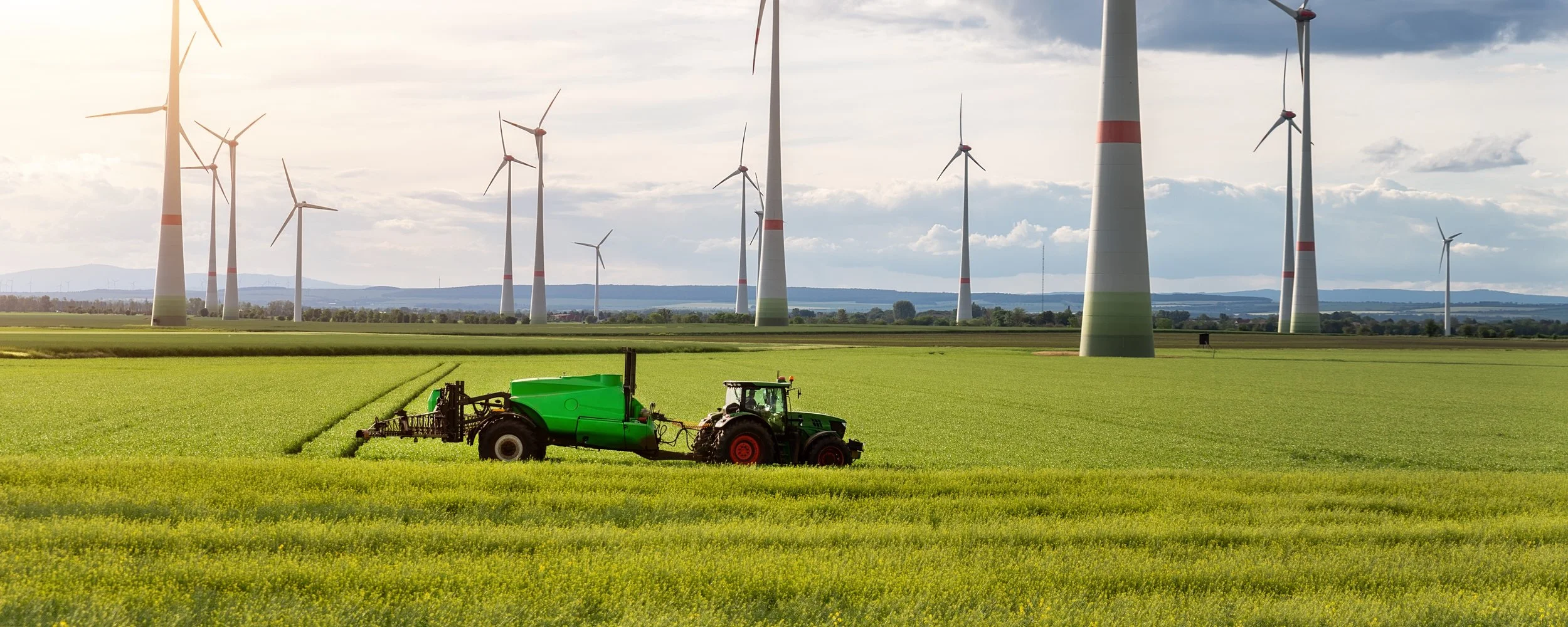
Distributed Nitric Acid Synthesis
Nitric acid from air, water, and electricity. No fossil fuels. No long supply chains.
Arctura's low-temperature plasma technology produces nitric acid on-site at potentially lower cost than delivered alternatives — with no natural gas required and no dependence on centralized production facilities.
The Problem with Conventional Nitric Acid Production
Nitric acid is a critical industrial chemical used in fertilizers, semiconductors, aerospace components, and explosives. Global production exceeds 60 million tons annually — almost all of it made using the Ostwald process, which depends on ammonia feedstock produced via the energy-intensive Haber-Bosch process. This chain of industrial processes consumes natural gas, emits hundreds of millions of tons of CO₂, and concentrates production in large centralized facilities. The result is a supply chain that is expensive, emissions-heavy, and fragile. Manufacturers who depend on nitric acid face transportation costs, delivery uncertainty, and exposure to global commodity price swings. Point-of-use production — making nitric acid where and when it is needed — has long been technically out of reach.
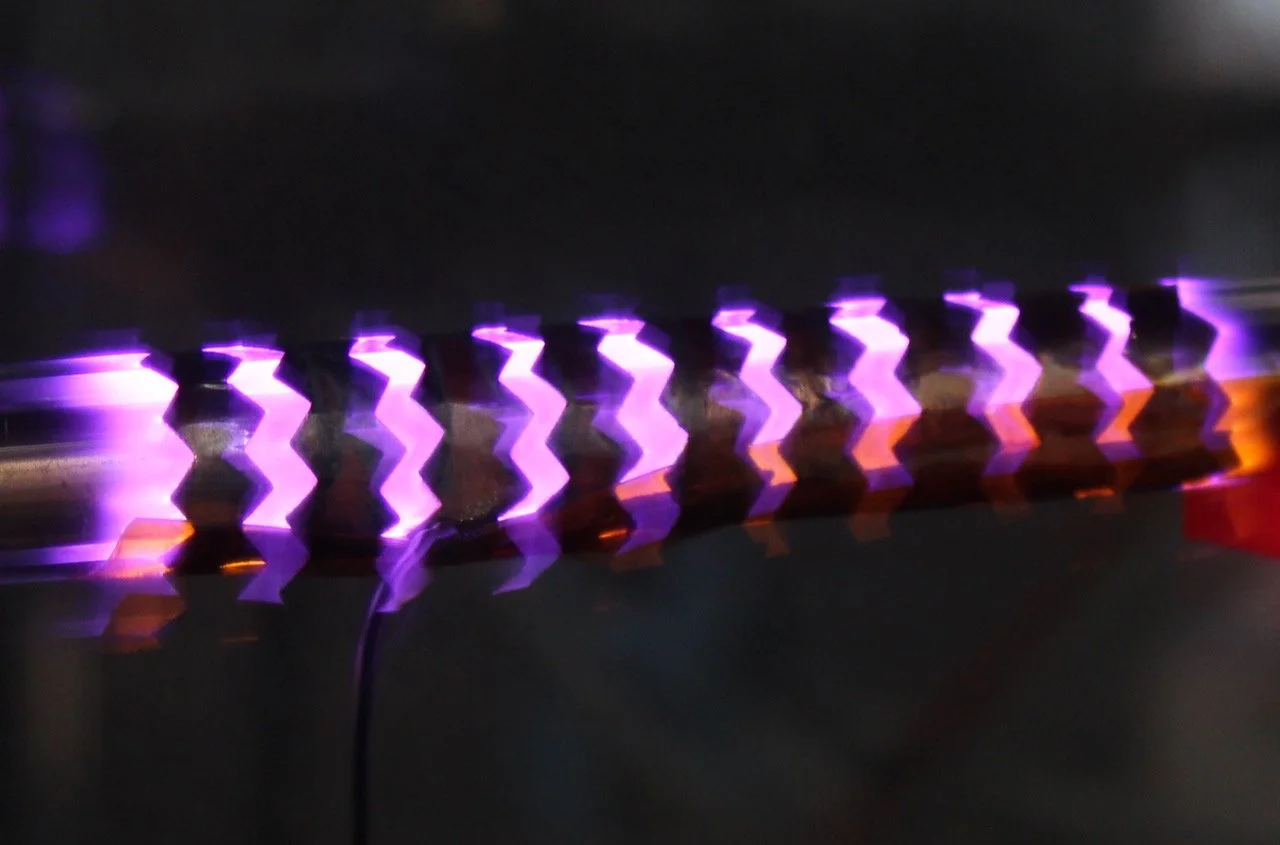
Arctura's dielectric barrier discharge (DBD) plasma reactor — the core of our nitric acid synthesis process.
The Arctura Approach: Plasma Nitrogen Oxidation
Arctura's low-temperature plasma (LTP) process produces nitric acid directly from air and water using electricity — bypassing the Haber-Bosch and Ostwald processes entirely. The key innovation is in-situ adsorption: as nitrogen dioxide (NO₂) forms in the plasma reactor, it is immediately captured by an adsorbent material before it can be destroyed by subsequent plasma events. This dramatically improves yield and energy efficiency relative to conventional plasma approaches.
Arctura's laboratory-scale reactor has demonstrated energy consumption of approximately 6 MJ/mol-N — an order-of-magnitude improvement over other DBD plasma nitrogen oxidation systems. The technology is being advanced toward a compact, modular form factor capable of field-deployable nitric acid production, supported by the U.S. Department of Energy.
Because the process is electrically driven and modular, production can be scaled to match demand, located at or near the point of use, and powered by renewable electricity — eliminating both the carbon footprint and the supply chain vulnerability of conventional production.
Why It Matters
Four advantages of the Arctura approach
Target Markets
Who benefits from distributed nitric acid production
Semiconductors & Electronics
Fabrication & Etching
High-purity nitric acid is essential for chip fabrication and circuit board etching. On-site production eliminates delivery logistics and supports just-in-time manufacturing.
Aerospace & Defense
Supply Chain Resilience
Nitric acid is used in propellant systems, metal surface treatment, and component manufacturing. Distributed production supports supply chain resilience for defense-critical applications.
Agriculture
Fertilizer Feedstocks
Nitric acid is a feedstock for ammonium nitrate fertilizers that feed the world. Localized production could reduce the cost and carbon footprint of fertilizer supply chains in remote or developing regions.
Development Status & Partnerships
Where we are — and who we're looking for
Arctura's nitric acid technology is currently at laboratory scale (TRL ~4), with a working reactor system demonstrating the core adsorption-enhanced plasma nitrogen oxidation mechanism. Development is ongoing with support from the U.S. Department of Energy, with a roadmap targeting modular, prototype-scale production.
Industrial Partners
Manufacturers in semiconductor, aerospace, or agricultural sectors who want to participate in technology development and shape the path to commercialization.
Co-Development Partners
Organizations with complementary capabilities in plasma systems, chemical engineering, or advanced manufacturing who want to collaborate on scaling the technology.
Investors
Mission-aligned investors who recognize the scale of the opportunity in distributed chemical manufacturing and want to participate in Arctura's next phase of growth.
Ready to explore what distributed nitric acid could mean for your operation?
Whether you're a potential industrial partner, co-developer, or investor — we'd like to hear from you.
Get in touch